The Science Behind Orthotic Footwear
When it comes to everyday comfort, the shoes you wear play a far more significant role than most people realise. At Revitalign, every pair is built on decades of biomechanical research — the kind of science that podiatrists and orthopaedic specialists rely on daily.
What Makes Orthotic Footwear Different?
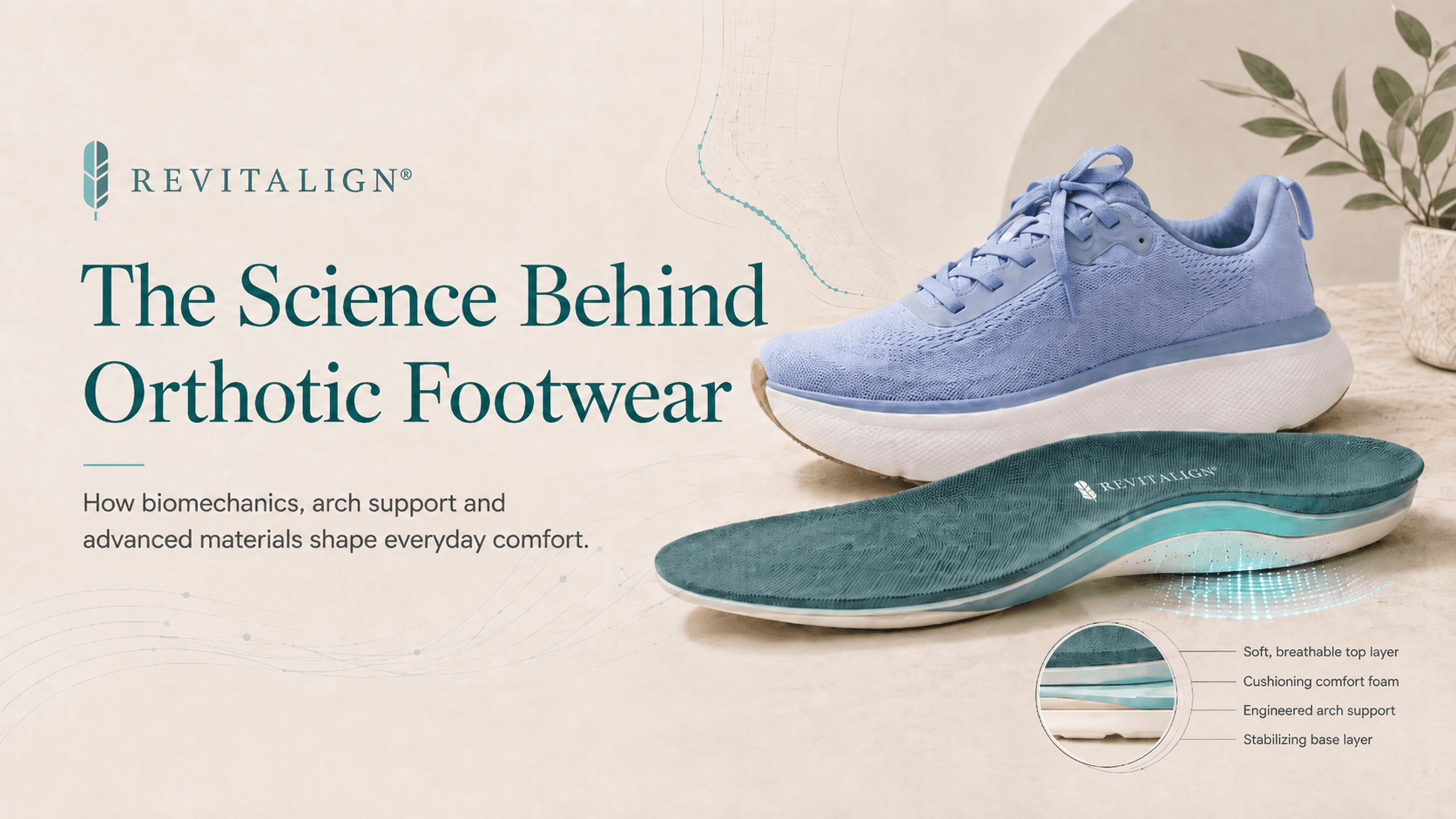
Traditional shoes focus primarily on aesthetics. Orthotic footwear, by contrast, starts with the foot's natural anatomy. A properly engineered midsole mirrors the contours of the plantar fascia, distributing pressure evenly across the heel, arch, and forefoot.
The result? Reduced fatigue, better posture, and a noticeable decrease in common complaints like plantar fasciitis and lower-back pain.
The Role of Arch Support
Your arch is essentially a shock absorber. When it collapses — as it does in flat or unsupported shoes — the kinetic chain from ankle to hip compensates in ways that lead to misalignment and discomfort. Revitalign's contoured footbeds are designed to cradle the arch in its neutral position, keeping your entire body in balance.
Materials Matter
We use dual-density EVA foam that offers firm support where you need it and cushioned comfort where you feel it. Cork composites add natural moisture-wicking properties, while our antimicrobial top covers keep things fresh throughout the day.
Style Without Compromise
The biggest misconception about orthotic footwear is that it has to look clinical. Our design team works to ensure that every silhouette — from sandals to sneakers — looks as good as it feels. Because wellness and style should never be mutually exclusive.